How to Choose Lightweight Curtains for Small Apartments
Small apartments ask a lot of a window. The same rectangle of glass has to pull in enough morning light to make a narrow living room feel open, shut out the streetlamp at midnight, and somehow not claim the only wall where the sofa fits. Curtains that are perfectly reasonable in a house — heavy velvet panels, deep swags, fabric pooling on the floor — tend to make a compact flat feel tighter than it did before. Lightweight curtains, chosen with a little care, do the opposite. They soften a room without crowding it, and they cost far less than most people expect. What follows is how to pick them: what fabric weight really changes, how to match it to the light and privacy your window needs, and how to hang everything when you rent and would rather not hand back a wall full of holes.
Start with fabric weight, not colour
Colour is the decision everyone makes first, and it is usually the least important one. Weight determines how a curtain falls, how much daylight it swallows, and how much visual bulk it adds to the window. In a small room, that last point matters more than anything printed on the label.
Lightweight fabrics — cotton voile, linen-sheer blends, washed cotton, thin polyester georgette — drift a little when a door opens and fold into a narrow stack when pushed aside. Mid-weight options such as linen-cotton blends and lighter cotton canvas hold a straighter line and dim the room slightly. Heavy fabrics like velvet, heavy linen or coated triple-weave blackout do a specific job very well, but in a small room they also block light at the edges, need a sturdier rod, and read as a solid slab of colour where a soft veil would have done.
You can judge weight with your hands in a shop. Gather about a metre of the fabric in your fist, hold for a second, and let go. A light sheer falls back loosely with a soft crease; a stiff or coated fabric springs open or keeps a hard fold. Then hold it up against the window light and ask yourself what you can see through it. Some shops list weight in grams per square metre on the label or in the product details. Rather than memorising numbers, compare two fabrics side by side — the difference becomes obvious within seconds.
Match the cloth to the job the window has to do
Before you fall for a fabric, decide what the window actually needs. A living room with one small window usually wants maximum daylight, so an unlined linen blend or a generous sheer that can be pulled almost fully clear of the glass is the right instinct. A bedroom facing east needs a way to soften a sunrise, and often a separate blackout roller blind behind a light curtain makes more sense than heavy lined drapes.
Layering is the classic answer and also the one that eats the most space. A sheer plus a heavier panel on the same rod needs a rod long enough to park both when they are open, which is a lot of wall in a studio flat. In tight rooms, try a single light curtain on a ceiling track combined with a roller blind behind it. You get two levels of light control with one layer of fabric and no stacking problem at all.
A few room-by-room shortcuts that hold up in practice:
- Living room, one window: unlined linen blend or voile, hung wider than the frame so the glass is never covered when open.
- Bedroom: light curtain in front, blackout roller blind behind, both mounted as close to the ceiling as the fitting allows.
- Kitchen or bathroom: a washable cotton-poly blend, sill length, nothing trailing near a hob or a wet floor.
- Ground-floor or street-facing window: a denser weave such as oatmeal linen-cotton, which looks soft in daylight and opaque at night.
Privacy is not the same as darkness
This is where lightweight curtains catch people out. A sheer that looks discreet in the afternoon can turn your living room into a lit stage after dark. When the room is brighter than the street, the fabric stops hiding anything — silhouettes, furniture, the shape of your evening.
Test it before you buy. Stand in the shop with the sample held up and your phone torch on behind it. If you can see the light source clearly, the fabric will do the same with a lamp behind it at nine in the evening. Sheers work well on upper floors and in rooms that are not overlooked; on a ground floor they need help.
The usual fixes are cheap. Café curtains on the lower half of the window keep the view and block the eye line from the pavement. A top-down roller blind lets you drop the top of the window while keeping the bottom clear. A denser, softly textured weave in a light colour gives you the floaty look without the transparency. None of these require a heavy curtain, which is the point — you are solving privacy with a second light layer instead of a thick one.
Hanging them when you rent
Most small flats are rented, and most renters have a story about a curtain rod. The good news is that lightweight curtains are the easiest kind to hang without doing damage, because the load is low.
A tension rod inside the window recess needs no tools at all, but it works only if the reveal is straight and the fabric is genuinely light. A single sheer is fine. A lined panel will sag it. Adhesive brackets can hold a light rod if you follow the weight rating, clean and dry the wall first, and keep them away from radiators and sunny south-facing walls where the adhesive softens. If you do drill, a narrow ceiling track is usually the kindest option: the holes are small, easy to fill, and the curtain drops straight down instead of projecting into the room from a bracket.
Placement that makes a small window look bigger
Mount the rod or track as high as you reasonably can — close to the ceiling rather than just above the frame — and run it roughly 15 centimetres past each side of the window. The extra height draws the eye upward and the extra width means the glass is fully exposed when the curtains are open. In a corner where a sofa or a desk sits close to the wall, use a single curtain pulled to one side instead of a pair. One panel needs a shorter rod, stacks in a narrower space, and never fights with the furniture.
Check your tenancy agreement before drilling anything, and if you are unsure, ask. Small fixing holes are usually straightforward to fill and touch up at the end of a lease, but the conversation is easier before than after.
Measure so the fabric doesn't eat the room
Two measurements decide whether light curtains look elegant or improvised: fullness and length. For sheers, one and a half times the window width is enough to give soft folds without a bulky stack. For a pleated heading, go closer to twice the width. More fabric means more folds and more space claimed at the side of the window, which is exactly what a small room cannot spare.
Length is simpler than it is made to sound. Choose either just below the sill or just above the floor, and avoid stopping halfway down the wall — that awkward mid-point is what makes a window look small. Skip puddling entirely in a compact flat; fabric on the floor collects dust and makes the room read shorter. If you plan to wash the curtains, buy a little longer or pre-wash them, because cotton and linen blends can shrink on the first wash.
A short checklist before you order
- Hold the fabric to the light and to a phone torch, by day and by night logic.
- Decide which job matters most for that window: daylight, privacy, or darkness.
- Confirm the weight suits your hanging method — tension rod for sheers only.
- Measure the window width, then add 15 centimetres on each side for the rod.
- Multiply the window width by 1.5 for sheers, 2 for pleats, and check the stack clears the glass.
- Pick the length: sill or floor, never mid-wall.
Get those six points right and the rest is taste. A light curtain that clears the glass, hangs from near the ceiling and lets you see out without letting the street see in will make a small room feel calmer and noticeably larger — which is a lot to ask of a piece of fabric, but lightweight ones deliver it.
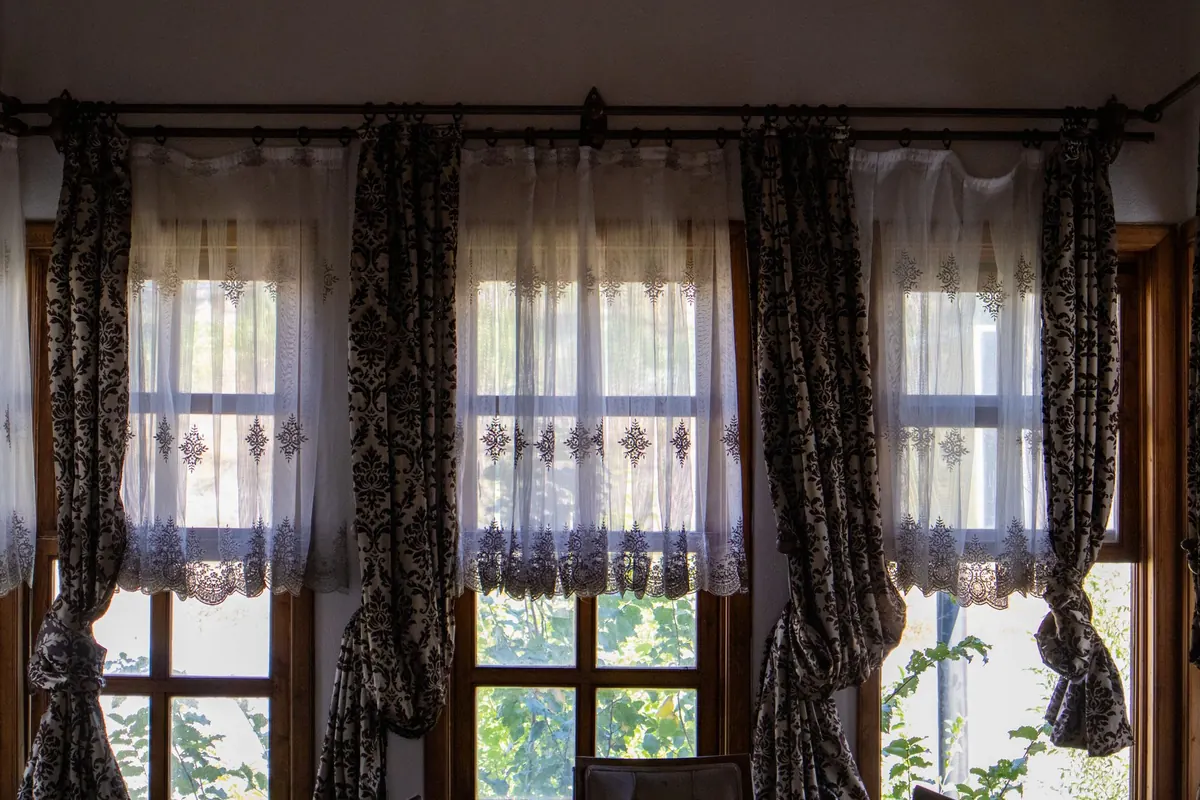
Photo: Zülfü Demir📸 / Pexels