Lightweight Camping Stoves: A Beginner's Guide to Fuel Types and Weight
A stove is the one piece of camping kit where the buying decision and the packing decision are the same decision. Choose a simple gas burner and you have committed, before you leave the house, to carrying a steel canister that weighs nearly as much as the fuel inside it. Choose a 20 g alcohol stove and you have committed to slower mornings and a windshield that actually matters. Neither is a mistake. They just solve different problems, and the trick is knowing which problem is yours.
Weight is a system, not a number
The figure on the box is the least useful number in the shop. What you carry is the whole cooking system: burner, pot, lid, windshield, lighter, fuel, and whatever container the fuel comes in. Two setups that look identical on paper can differ by 150 g once you put them on the kitchen scales.
A typical screw-on canister stove weighs somewhere around 70 to 90 g. A 100 g canister, full, comes in at roughly 200 g because the steel body is heavy; a 230 g canister is closer to 370 g. An alcohol stove can be 15 to 30 g, but you still need a pot stand and a windshield, and your fuel travels in a bottle that holds 100 to 250 ml. Add a 180 g titanium or aluminium pot to either system and the gap narrows fast.
So stop comparing burners and start comparing kits. Put everything you would take for one night on the table — pot, lid, spoon, stove, fuel, stuff sack — and weigh it together. That number is the one that ends up on your back.
Canister stoves: the easy default
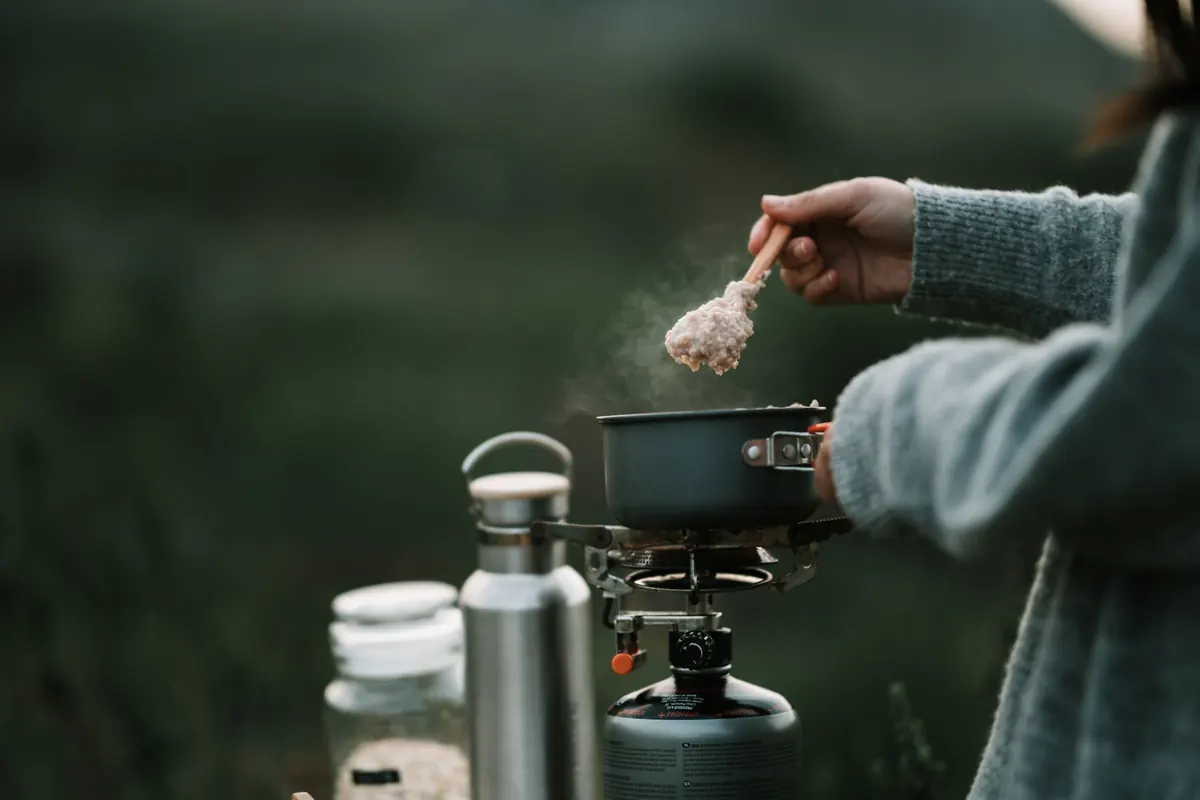
Screw a cartridge onto the burner, turn the valve, click the ignition. Heat arrives in seconds, it simmers when you ask it to, and you can boil half a litre of water in the time it takes to find your mug. This is why canister stoves are what most people buy first, and usually what they keep.
Where they win
Short trips with real cooking. Three-season weather. Two people sharing a pot. Anything where convenience is worth more than 60 g. A simple burner with a wide flame head handles a 1.5 litre pot without scorching the middle, and a 230 g canister will comfortably cover a weekend of dinners and coffees for two in mild conditions.
Where they bite
Cold. As the temperature drops, the pressure inside the canister falls and the flame shrinks to something apologetic. Blends with more propane hold up better, and you can keep a canister warm inside a jacket or a sleeping bag, but a deep winter trip is not where a cheap canister stove shines.
There is also the awkward half-empty problem. Canisters cannot be refilled in most places, so a part-used one is dead weight you carry home and then pay to dispose of. Plan your fuel, finish the canister, and recycle it where facilities exist.
Alcohol stoves: the lightest kit, the slowest brew
An alcohol stove is often just a shaped cup with holes in it. Fuel goes in, you light it, and once the metal is hot the flame pressurises itself and settles into a quiet blue ring. No valves, no seals, no ignition to fail. The silence is genuinely lovely on a still evening.
It is also slow, and it hates wind. As a rough guide, expect to burn around 25 to 30 ml of methylated spirits to boil half a litre in mild, sheltered air — and considerably more if the stove is exposed. That means a windshield is not an accessory, it is part of the stove. Set it up on a level, non-flammable surface, out of the breeze, and give it time.
Fuel is cheap and easy to decant into small bottles, so you can carry exactly what you need. The flame is nearly invisible in daylight, which is worth remembering when you reach over the stove. And because output is low, alcohol suits one pot and one or two people: rehydrating a meal, making tea, warming soup. It does not suit a frying pan or a family dinner.
Solid fuel: a backup, not a plan
Hexamine tablets and a folding stand weigh almost nothing and will still light when everything else is damp or frozen. For an emergency kit, a bothy bag, or a day hike where you want one hot drink and no fuss, that reliability is worth a lot.
As a main stove it is limited. Tablets burn with modest heat, leave residue on the pot, and struggle in wind. You also have less control — once lit, you are committed to roughly one tablet's worth of burning. Treat solid fuel as the thing in the bottom of your pack that gets you a brew when the gas runs out, not as the system you build a trip around.
Matching fuel to short trips
Most people overestimate how much stove they need and underestimate how much fuel they carry. A few honest pairings:
- Day hike, one hot drink: a flask, or a solid-fuel tablet and a mug. Leave the gas at home.
- One night, solo, one cooked meal: a 70 g canister burner and a 100 g canister. Light, simple, done.
- Two nights, two people, proper dinners: the same burner with a 230 g canister, plus a wider pot and a lid that fits.
- Cold mornings, shoulder season: a canister with a high-propane blend, kept warm in a jacket, or an alcohol stove if you are patient and sheltered.
- Flying or travelling abroad: buy fuel at your destination. Fuel of any kind is usually restricted in luggage, so check the rules before you pack.
- Dry, windy country or a fire ban in force: check local regulations first. Open-flame stoves are sometimes restricted, and an alcohol stove is exactly the sort of thing a ranger will ask about.
Small habits that save fuel and grams
Fuel weight is the easiest weight to cut, because most of it is wasted by technique rather than by gear.
- Always use a lid. An open pot can take noticeably longer to boil, and you pay for that in fuel.
- Use a windshield, even on a calm day. A metre of folded foil weighs less than the extra 50 ml of fuel you would otherwise carry.
- Boil only what you need. Half a litre is enough for a dehydrated meal and a hot drink; a full pot of water is a lot of gas.
- Turn the stove off a minute early and let the pot sit with the lid on. Residual heat finishes the job.
- Rehydrate in a pot cozy or a insulated pouch rather than simmering on the flame.
- Cook one-pot meals. Every extra pan is weight before you even light the stove.
- On a one-night trip in mild weather, consider taking no stove at all. A no-cook dinner and a flask can be genuinely good, and it takes your cook kit to zero.
One safety note that is not optional: never run any of these stoves inside a tent or a closed shelter. Carbon monoxide is colourless, has no smell, and has killed experienced campers. Cook outside, or in a properly ventilated porch with the stove well away from fabric.
A sensible first stove
If you want one stove for ordinary short trips in three seasons, buy a simple screw-on canister burner in the 70 to 90 g range, a 100 g canister for a solo night and a 230 g one for shared weekends, and a pot with a lid that actually seals. That kit is boring, quick, and it works in the rain.
Then, if you find yourself going out alone and caring more about pack weight and quiet than speed, add a cheap alcohol stove and a small bottle. Use it on calm evenings and take the gas when the forecast is grim. Weigh the whole cook kit once a season. The burner is almost always the lightest thing in the bag, and the decisions around it are where the real grams live.
Photo: Taryn Elliott / Pexels